


Overview


Background
This chili paste originated as a preservation method - soybeans were boiled, pounded, and sun-dried into flat discs that could last for months. When food was scarce, people would grind them with chilies and eat the paste alongside foraged greens. Over time, it became a flavorful emblem of Northern ingenuity and resilience.
Traditionally served with Pak E-Lerd and other wild vegetables, this dish represents balance: the depth of fermentation with the brightness of fresh produce. Still made in home kitchens, it remains a symbol of communal cooking and the care that defines Northern Thai food culture.
Region
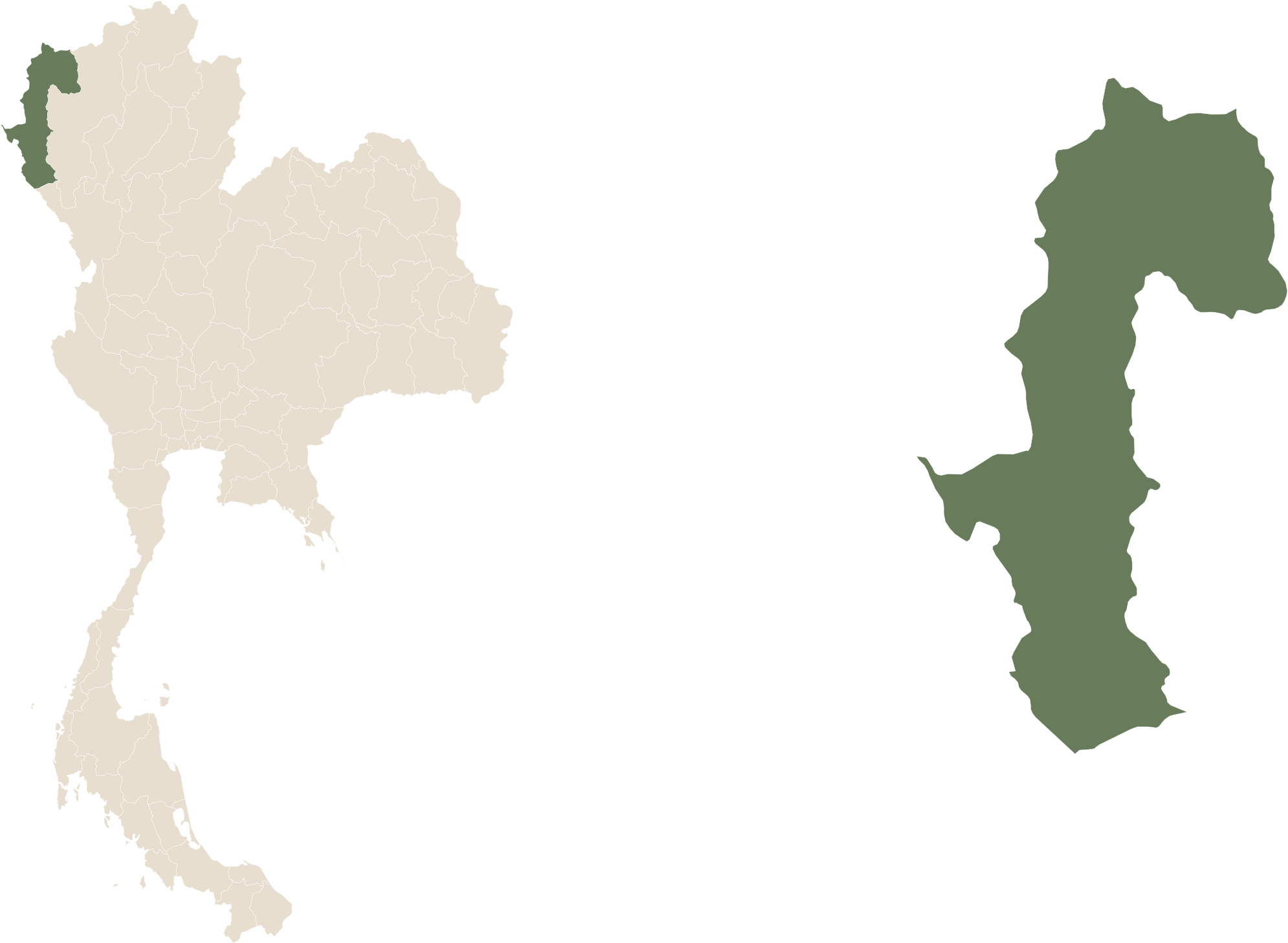
Mae Hong Song
Tucked among the highlands of northern Thailand, Mae Hong Son is a province of forests, rice terraces, and rich cultural heritage. Its people continue to practice traditional food preservation and communal cooking, linking generations through shared meals.
Cook
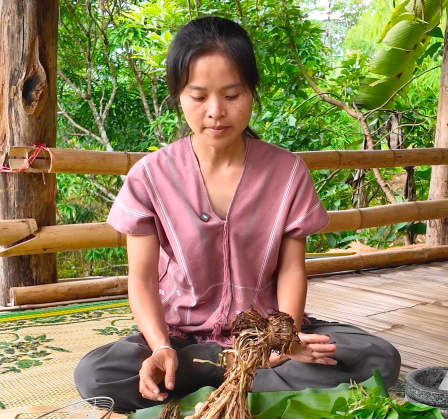
Boonmee ‘Muk’ Sibuala
Muk was born and raised in Muang Pam village, a small Karen community in Mae Hong Son province. She spent her childhood in the village, attending the local kindergarten and primary school before helping her family with daily chores. Much of her cooking knowledge comes from her mother, who has always prepared traditional dishes for the family. From a young age, Muk learned to cook by watching and assisting her mother in the kitchen, absorbing recipes that had been passed down through generations. Now in her eighties, Muk's mother still represents the heart of these traditions, and Muk continues to carry them forward through her own cooking.
Recipe
Vegetables & Legumes
- Phak Eeluen (local mountain vegetable)
- Small tomatoes
Herbs & Spices
- Garlic
- Chili peppers
- Salt
Other
- Fermented soybean sheet (Thua Nao Phaen)
Step 1
Skewer the small tomatoes and chili peppers on bamboo sticks or place them in a grill basket. Roast until softened and lightly charred.
Step 2
Gently roast the fermented soybean sheet (Thua Nao Phaen) until it turns slightly yellow and fragrant.
Step 3
Roast the whole garlic heads along with the skewered tomatoes and chili peppers until cooked through.
Step 4
Wash and soak the Phak Eeluen leaves and stems thoroughly in water.
Step 5
In a mortar, pound the roasted chili peppers, roasted garlic (peeled), roasted tomatoes, and salt into a smooth paste.
Step 6
Break the roasted fermented soybean sheet into pieces and pound it into the mortar with the chili paste until fully incorporated.
Step 7
Drain the soaked Phak Eeluen and pound it gently into the paste until evenly combined.
Step 8
Add a small amount of water to achieve a slightly moist consistency. Serve immediately with boiled or fresh seasonal vegetables.