


Overview


Background
In Cuba, the Tamal en hoja became a popular dish in the 19th century(even when it was already consumed by the Tainos), especially in rural areas. Unlike the Mexican tamale, which usually has distinct fillings, the Cuban version is characterized by mixing pork directly into the masa, seasoned with garlic, onion, peppers, and spices.
The abundant banana leaves native to the island give it a distinctive aroma while protecting the masa during cooking though corn husks can be used as well. The Cuban tamal en hoja is also a symbol of community and celebration: it is traditionally prepared in large quantities for family gatherings, countryside festivities, and special occasions.
Region
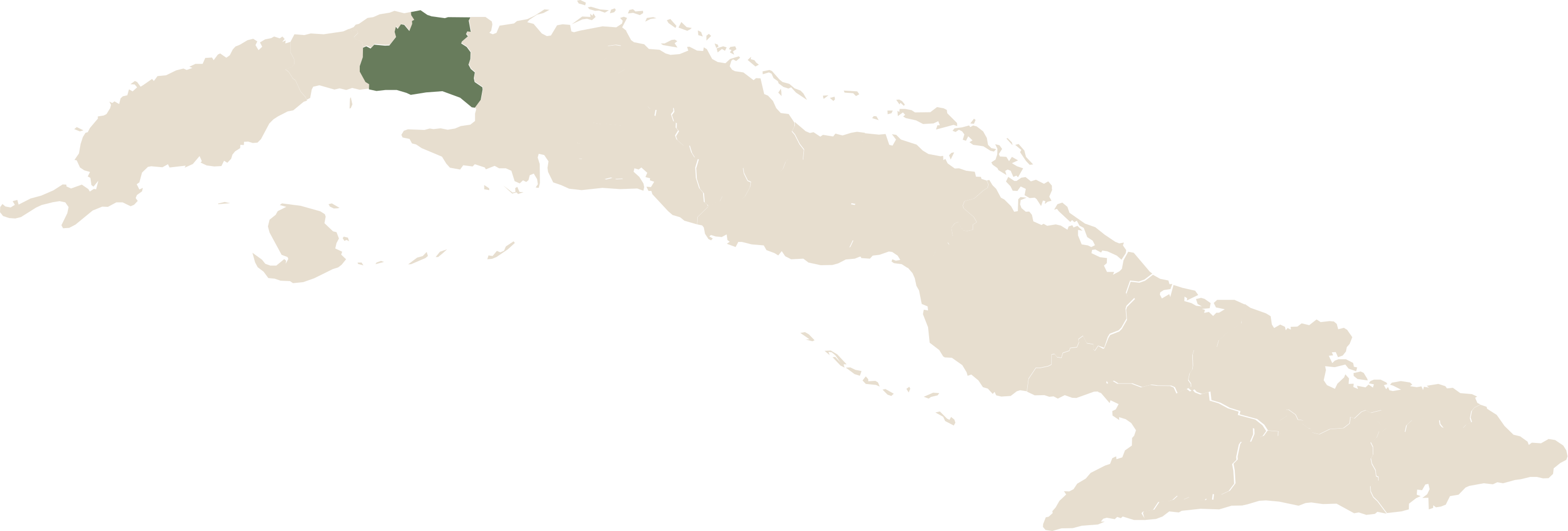
Mayabeque, Cuba
Mayabeque is Cuba’s smallest province, yet one of its most productive. The region yields citrus fruits, tobacco, wine grapes, and sugarcane used in Havana Club rum. Beyond its distilleries and farmland, Mayabeque offers a glimpse of authentic rural life, dotted with scenic treasures such as lush gardens, the Jaruco area, and the impressive Bacunayagua Bridge.
Cook
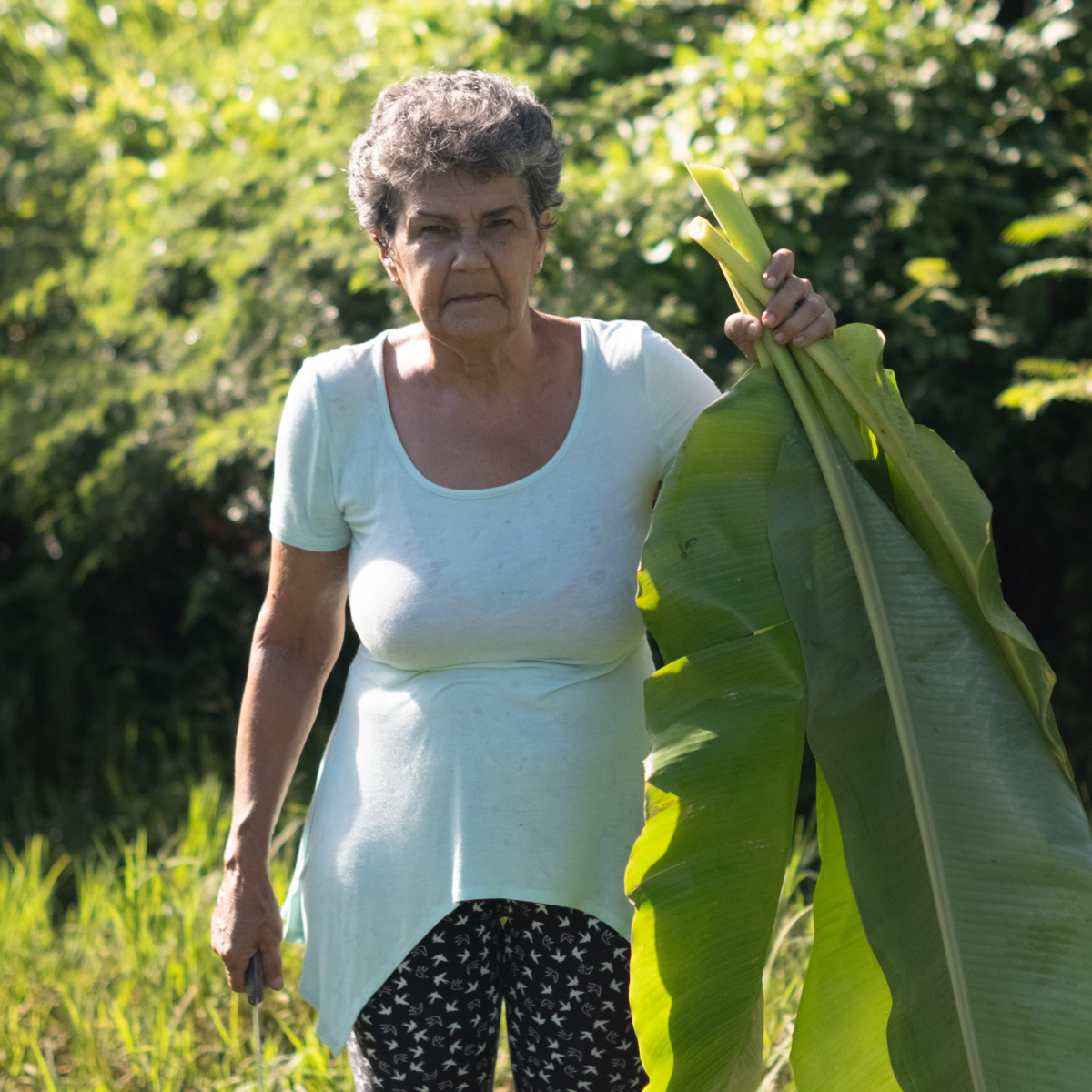
Maria Mirabal López
María was one of fourteen siblings born in Central Elía Colombia, in the province of Camagüey. Her family worked in the fields, and from a young age she stayed at home to help her mother with household chores, especially cooking and cleaning. By watching her mother and assisting her, she learned to prepare many of the region’s traditional dishes, among them tamal en cazuela, a recipe that over time became her specialty.
María recalls that tamal was not an everyday meal, but rather a dish reserved for festive occasions or family celebrations. On those days, it was served alongside fresh vegetables, pork, and the essential arroz moro, creating a plentiful meal that brought the entire family together around the table. For her, each preparation was not only an act of cooking but also a way to keep tradition alive and to pass down the culinary legacy she had inherited from her mother.
Recipe
Vegetables & Legumes
- Garlic
- Onion
- Chili Pepper
- Ground Corn
Protein
- Pork
Herbs & Spices
- Salt
- Cumin
Others
- Oil
- Banana Leaves
- Tamale Leaves
Step 1:
Chop the pork into small pieces. Heat a pan and fry the pork until it begins to brown.
Step 2:
Add salt to taste, stirring to coat the pork evenly.
Step 3:
Pour in oil and continue cooking, ensuring the pork is well coated and slightly crispy.
Step 4:
Combine the cooked pork with the ground corn. Mix thoroughly to integrate the ingredients.
Step 5:
Mash the pork and corn mixture until it reaches a uniform, soft consistency.
Step 6:
Chop the onion and chili pepper finely. Mix the chopped onion and chili with the spices, including cumin, salt, and a pinch of sugar. Add this spice mixture to the pork and corn, stirring to blend all flavors evenly.
Step 7:
Pour in soy sauce and cook the mixture briefly, allowing the flavors to develop.
Step 8:
Prepare the tamale leaves and wrap the mixture tightly to form tamales. Tie them securely, and they are ready for steaming or cooking.